


UC Browser-Safe, Fast, Private
UCWeb Singapore Pte. Ltd.
I approached UC Browser-Safe, Fast, Private as a replacement for the browser I normally keep on my phone, rather than as an app I would open only for occasional searches. That distinction matters because a mobile browser becomes useful through small daily habits: opening a news page, checking a delivery update, searching for a product, or following a link from a message without losing track of the original task. UC Browser is built for that kind of communication-focused browsing, and its free entry point makes it easy to try without making an immediate purchase decision.
The app comes from UCWeb Singapore Pte. Ltd. and has been available since October 25, 2011. It is intended for Everyone and works on Android 8.0 or later. Its scale is difficult to ignore: it has passed one billion installs, with an average score of 4.4 from around twenty-two million ratings and roughly one hundred seventy-eight thousand written reviews. Those figures do not automatically make it the best browser for every person, but they do suggest that it has become a familiar option for people who want an alternative to the browser already installed on their phone.
What to expect before you make it your everyday browser
The first thing I noticed is that UC Browser presents itself as more than a simple address bar and tab screen. Its store summary highlights built-in VPN and AI tools, alongside an emphasis on private, fast internet use. In practice, that positioning means the app tries to bring browsing, content discovery, and extra assistance into one place. Some users will appreciate that convenience; others may find the additional layers busier than a minimalist browser.
I would recommend approaching it as a practical general-purpose browser, not as a specialist privacy solution or a guaranteed answer to every connection problem. A browser can make pages easier to reach and can offer useful controls, but it does not remove the need to think carefully before entering passwords, downloading files, or trusting unfamiliar websites. The private label may attract people who want more control, yet privacy depends on how the browser is configured and how the person uses it.
There is also a meaningful difference between trying the app and paying for optional extras. The app itself is free, while in-app purchases range from ten cents to ninety-nine dollars and ninety-nine cents per item. I would not treat those purchases as necessary for the basic decision of whether the browser suits you. My advice is to begin with ordinary browsing, understand the interface, and only then decide whether any paid element has a clear benefit for your own routine.
Latest News

Uber Eats Under Pressure: What Happens When Delivery Goes Wrong

How QR & Barcode Scanner Adapts to Android and iOS Innovations

Why Waze Navigation & Live Traffic Is Your Essential Travel Companion

CapCut Mastery: Unleash Hidden Features for Pro-Level Editing

How OS Updates Enhance Roblox Adventures

Teacher Simulator: Exam Time Turns Quick Classroom Judgments into a Repetitive Loop
Compared with the usual default browser on an Android phone, UC Browser feels more deliberately packaged around convenience features. A default browser often wins because it is already connected to the phone’s ecosystem and requires almost no learning. UC Browser is more appealing when you want a separate browsing environment, built-in tools, or a different way to organize online activity. The trade-off is that a larger feature set can mean more screens, prompts, and settings to understand.
Who will get the most from it
I think the app is a good fit for someone who regularly switches between searches, articles, social links, and quick communication tasks on a phone. It can also suit a first-time alternative-browser user who wants to experiment without paying at the start. People using older supported Android phones may value having an option that does not require a recent operating system, although the real experience will still depend on the phone, connection, and websites being visited.
I would be more cautious if your priority is a completely stripped-down interface, deep integration with one particular account ecosystem, or a browser chosen solely for a highly specialized privacy philosophy. In those cases, a minimalist browser or a browser whose main strength is synchronization may feel more natural. UC Browser’s appeal is its combination of tools, not its ability to disappear into the background.
Gallery
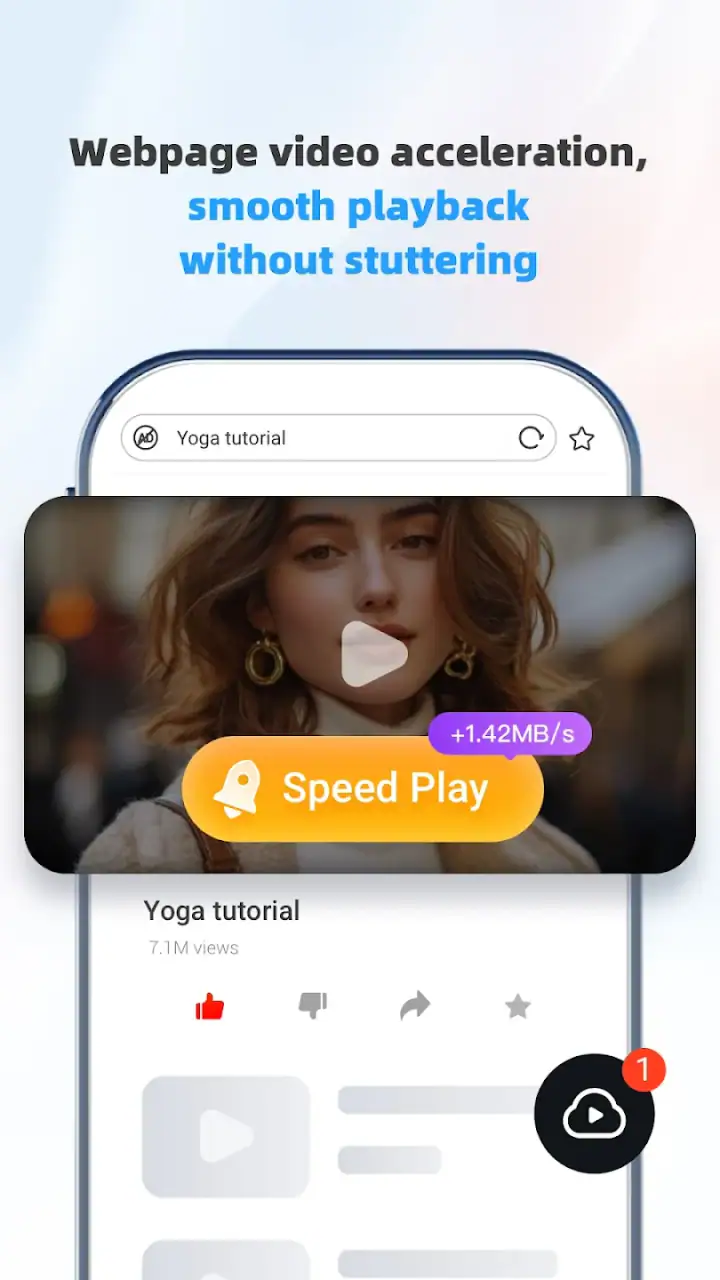
First setup: getting from installation to a comfortable starting point
After installing the app, I would resist the temptation to accept every option quickly just to reach the home screen. The most useful first step is to look at what the browser presents as its main starting area and identify which parts you actually expect to use. If the page feels crowded, spend a moment checking whether the visible content or shortcuts can be adjusted. A browser becomes much less distracting when the first screen reflects your routine instead of showing every possible entry point.
I also recommend deciding early whether this will be your main browser or a secondary one. That choice affects how you handle links from messages and other applications. If you want UC Browser to become your regular destination, make it the default only after testing a few ordinary tasks. If you are comparing browsers, keep it separate at first. This makes the comparison fair and prevents a single unfamiliar screen from disrupting the way you normally open links.
The built-in VPN reference is likely to be one of the first things that catches a new user’s attention. I would treat it as a tool to understand rather than a switch to enable automatically for every activity. A VPN can change how a connection is routed, which may affect speed, access, or the behavior of some sites. For everyday reading, compare the experience with and without it instead of assuming that the private setting is always faster or always necessary.
The same measured approach applies to AI-related functions. An assistant can be useful for handling information or helping you move through content, but I would avoid sharing sensitive details merely because a tool is convenient. Do not paste private conversations, account credentials, financial information, or confidential work material into any browsing assistant. The practical benefit is strongest when you use it for low-risk tasks such as organizing a general search or helping you understand a page.
One small but important setup habit is to check where downloaded material goes and how tabs are arranged. This is not glamorous, but it prevents two common frustrations: losing a file after downloading it and opening so many pages that returning to the original task becomes difficult. I prefer to close completed tabs immediately and keep only pages that still serve a purpose. That simple discipline makes a feature-rich mobile browser feel considerably calmer.
Your first successful action should be deliberately ordinary
For a first meaningful test, I would search for something you already need rather than choosing a random demonstration. For example, imagine receiving a message with a long article about a product you are considering. Open the link in UC Browser, read enough to judge whether the page loads comfortably, use the browser’s available tools only if they genuinely help, and then return to the message. This short workflow tests the parts that matter in real life: opening a link, reading, moving back, and keeping your place.
Another useful test is to search for a local service, compare two pages, and save the result in a way you can find later. I would pay attention to whether the text is readable, whether navigation is predictable, and whether the app makes it obvious which tab is active. These details tell you more about long-term suitability than a quick glance at the home screen.
When I test a browser, I also try one page that contains several images and one page that is mostly text. The first reveals how comfortable the app feels with richer content; the second shows whether reading is pleasant without visual clutter. I would not judge performance from one page alone, because websites vary widely and a slow result may come from the site or connection rather than the browser itself.
A practical everyday scenario is checking a travel update while coordinating with someone in a chat. I might open the link, read the relevant section, switch back to the conversation, and then return to the page to confirm a detail. If the tab and back-navigation behavior feel natural during this small sequence, the app has already proved its value. If I repeatedly lose the page or encounter prompts that interrupt the task, that is a sign the browser may not suit my habits.
Common confusion and the trade-offs I would explain to a new user
The most likely confusion is assuming that every privacy-related control has the same purpose. Private browsing, a VPN-style connection, and simply deleting local history are different ideas. One may affect what is retained on the device, another may affect how traffic is routed, and neither should be treated as permission to trust every website. I would read each control’s description carefully and use the narrowest tool that solves the problem.
Another point worth understanding is that “fast” is not a permanent promise. Page speed depends on the network, the phone, the website, and the amount of content being loaded. A browser may feel quick on a text-heavy page and less impressive on an image-heavy site. If a page is slow, I would first try closing unnecessary tabs, checking the connection, and testing another site before deciding that the app itself is at fault.
The home screen can also create a false impression that the browser is primarily a content feed. If you only want to type an address or search, look for the direct search field instead of browsing through recommendations. This is one of my more useful habits with UC Browser: I treat the feed as optional and return to direct navigation whenever I have a specific destination. That keeps the app focused on the task rather than turning a quick search into an unplanned scrolling session.
People may also wonder whether the app is genuinely free when purchases appear in the product experience. The straightforward answer is that you can start using the browser without paying. Optional items may appear at different prices, from a very small amount to nearly one hundred dollars, so I would check the purchase screen carefully and avoid buying anything until you know exactly what it changes. For most first-time users, the right first step is evaluation, not spending.
Compatibility is another practical question. The app supports Android 8.0 and newer, which covers many established devices but does not mean every phone will deliver the same result. Storage, memory, manufacturer software, and network quality can all change how smoothly tabs and pages behave. If your phone is older or already struggles with several apps open, keep the first test modest and avoid judging it through a large collection of simultaneous tabs.
Three less obvious habits that improve the experience
First, I would use a two-stage tab routine. Keep one tab for the original task and open related pages separately, then close the related tabs as soon as you have extracted the information you need. This is particularly helpful when following links from a conversation because it protects the starting point from being buried. The browser becomes a temporary workspace rather than a pile of pages you may never revisit.
Second, I would compare the VPN option with your normal connection during a low-risk task before relying on it for anything important. Check whether the pages you use remain accessible and whether the experience changes enough to matter. This is a better test than turning it on during an urgent transaction. If a site behaves unexpectedly, you will know which setting to examine first.
Third, I would separate reading from discovery. When I want to research a subject, I open a small number of relevant pages, note the useful information, and then leave the feed or recommendations. This reduces the chance of mistaking suggested content for something I intentionally searched for. It also makes the app more efficient for people who want a browser rather than another source of endless content.
A fourth habit is to treat AI assistance as a convenience layer, not as an authority. If it helps summarize or organize a general topic, verify important claims on the original page before acting on them. This matters especially for health, money, travel, and account-related decisions. The browser can make information easier to reach, but the final judgment still belongs to you.
Who should choose it, and when another browser is better
UC Browser makes the strongest case for itself when you want a free, broadly capable mobile browser with privacy-oriented tools and an alternative to the default experience. Its enormous user base and high average score show that many people find the overall package useful, though popularity should be treated as context rather than proof that it will match your preferences.
I would choose it for a phone used heavily for links, searches, articles, and quick online tasks, especially if I wanted to explore built-in VPN and AI options without installing several separate tools immediately. I would also consider it for a secondary browser dedicated to research or general browsing, where keeping that activity apart from my primary browser is convenient.
I would skip it if I strongly prefer a quiet interface with almost no extras, or if my main reason for changing browsers is seamless synchronization with a specific desktop setup. In that situation, the browser already connected to your accounts may save more time. I would also look elsewhere if you need a browser selected for a very specific privacy model and are unwilling to study how its individual controls work.
My final recommendation is to give the app a focused trial rather than making a sweeping judgment after installation. Open a normal link, complete a search, test the tab flow, inspect the privacy tools, and decide whether the extra features help or distract you. The best reason to keep UC Browser is not its feature count; it is whether it makes your own everyday browsing easier without adding friction. For many Android users, that balance will be good enough to make it a dependable alternative. For others, a simpler or more tightly integrated browser will remain the better choice.
FAQs for UC Browser-Safe, Fast, Private
What makes UC Browser stand out from other mobile browsers?
UC Browser offers a unique combination of speed and data efficiency, making it ideal for users with limited data plans. Its cloud-based technology compresses data, which results in faster page loading times. Additionally, it provides a range of features like a built-in ad blocker and customizable themes, enhancing the overall user experience.
Is UC Browser safe to use for private browsing?
UC Browser includes a private browsing mode that allows users to surf the internet without leaving a trace. It doesn't save browsing history, cookies, or search history in this mode. However, users should be cautious and ensure they download the app from official sources to avoid any security risks associated with unauthorized versions.
Does UC Browser support extensions and add-ons like other browsers?
UC Browser does not support as extensive a range of extensions as some desktop browsers, but it does offer some built-in tools such as a video downloader and ad blocker. These features aim to provide a streamlined experience without the need for additional add-ons, catering to the average user’s needs.
How does UC Browser handle multimedia content compared to other browsers?
UC Browser excels in handling multimedia content by offering a fast and smooth streaming experience. It includes a built-in video player that supports a wide range of formats, and its download manager allows users to easily download videos and other media files for offline viewing, which is a big plus for multimedia enthusiasts.
What are the main privacy concerns with using UC Browser?
While UC Browser offers features like private browsing, concerns have been raised about data security and user privacy. It's essential for users to regularly update the app to the latest version to benefit from improved security features and fixes. Always review permissions and privacy settings to ensure your data is protected.
Pros
- Fast browsing speed enhances user experience.
- Built-in ad blocker reduces interruptions.
- Data saving mode conserves mobile data.
- Customizable themes for a personalized look.
- Integrated video downloader for offline viewing.
Cons
- Privacy concerns due to data tracking.
- Occasional compatibility issues with websites.
- Limited extension support compared to competitors.
- In-app ads can be intrusive at times.
- Frequent updates may cause temporary glitches.


